Shifts in Promotional Strategies Following Recent Legislative Updates in Gambling Markets
Elena Washington · Sep 20, 2026
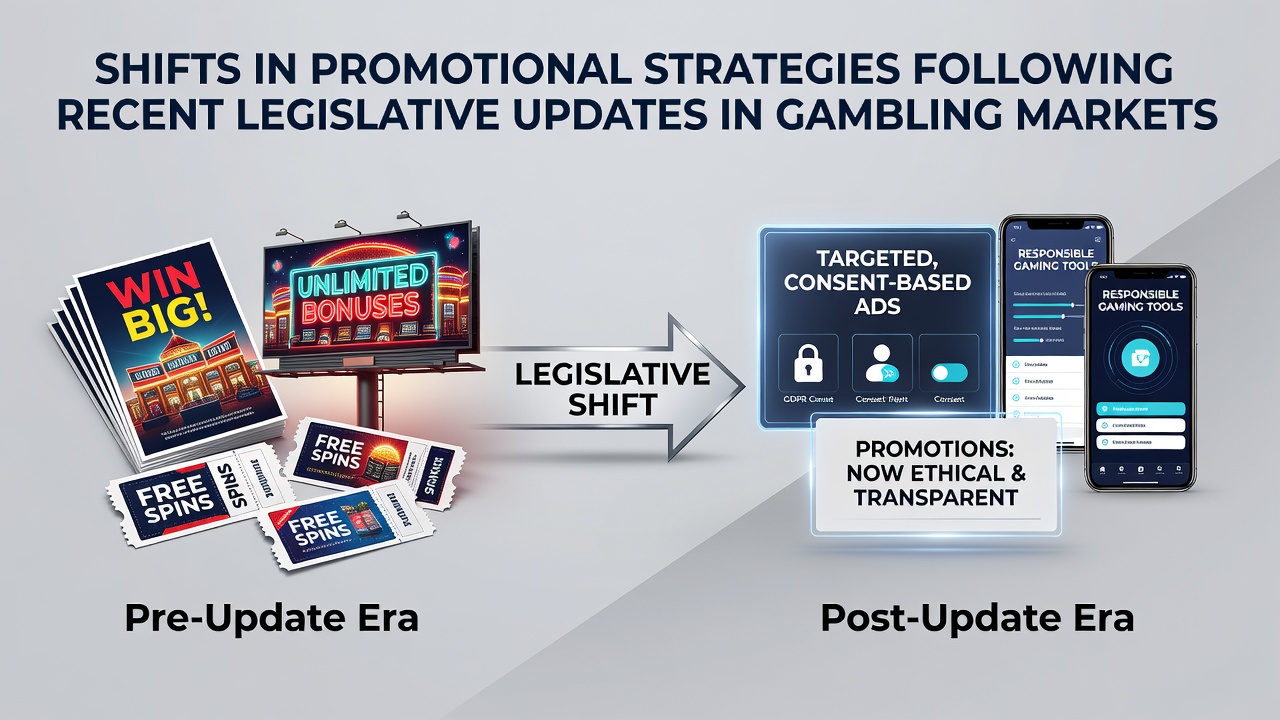
Shifts in Promotional Strategies Following Recent Legislative Updates in Gambling Markets
Legislative updates across multiple jurisdictions have prompted operators to revise how they structure and deliver promotions in gambling markets, with adjustments ranging from bonus mechanics to advertising channels. Data from regulatory filings shows that markets in Canada, Australia, and parts of the European Union introduced or expanded rules on player incentives between 2024 adn 2026, leading companies to shift away from high-value welcome offers toward loyalty programs and conditional rewards. Observers note that these changes align with broader efforts to emphasize consumer protection while maintaining commercial viability.
Key Legislative Developments Across Regions
In Ontario, updates to iGaming regulations effective in early 2025 required clearer disclosure of bonus terms and imposed limits on wagering requirements, prompting platforms to redesign their promotional packages around lower thresholds and time-bound offers. Figures from iGaming Ontario reveal that average bonus values declined by approximately 15 percent in the first half of 2026 compared with the prior year, as operators adapted to mandatory transparency standards. Similar patterns emerged in Australia, where state-level amendments to advertising codes restricted the promotion of deposit matches during live sports broadcasts, pushing marketers toward targeted digital campaigns that comply with audience age-verification protocols.
European markets saw further refinements through directives that took full effect in several member states by mid-2025, including caps on free spin volumes and mandatory opt-in mechanisms for promotional communications. Industry reports compiled by the European Gaming and Betting Association indicate that these measures reduced unsolicited bonus emails by over 30 percent in monitored jurisdictions, while increasing the prevalence of in-app reward systems that players activate voluntarily. And in September 2026, additional reporting requirements are scheduled to roll out in select Canadian provinces, requiring operators to submit detailed logs of promotional redemptions for audit purposes.
Adjustments to Bonus Structures and Player Incentives
Operators responded to these rules by replacing flat-rate deposit bonuses with tiered loyalty rewards that accumulate based on play volume rather than initial deposits. Research compiled by academic teams at the University of Sydney demonstrates that such volume-based systems correlate with steadier engagement patterns, as players receive smaller, incremental benefits instead of large upfront offers subject to strict playthrough conditions. Companies in regulated markets now frequently incorporate responsible gaming pauses directly into promotion flows, requiring users to confirm session limits before claiming rewards.

What's notable is the move toward non-cash incentives such as tournament entries and merchandise credits, which sidestep certain monetary restrictions while still providing perceived value. Data indicates that these alternatives grew in usage by roughly 22 percent year-over-year in markets with updated bonus caps, according to filings submitted to provincial regulators. Those who've studied player behavior across platforms report that conditional rewards tied to verified play activity help operators maintain compliance without fully eliminating incentive programs.
Evolution of Advertising and Outreach Methods
Legislative changes also reshaped how promotions reach potential customers, with stricter rules on influencer partnerships and social media placements. In Australia, updated codes enforced by the Australian Communications and Media Authority now require all promotional content to carry prominent responsible gaming messages, leading agencies to embed these disclaimers within video and banner creatives rather than as afterthoughts. Canadian operators, facing parallel requirements, shifted budgets toward email and push-notification channels that allow precise age gating and consent tracking.
Industry analyses show increased reliance on affiliate networks that specialize in compliant traffic, as direct advertising avenues narrowed in several jurisdictions. Observers note that this transition encouraged teh development of data-driven segmentation tools, enabling operators to tailor offers based on verified player profiles instead of broad demographic blasts. The result has been a measurable reduction in complaint volumes related to misleading promotions, though exact percentages vary by market.
Integration of Compliance Tools and Responsible Gaming Features
Many platforms embedded compliance features directly into promotional interfaces, such as automatic limit-setting prompts that appear when users attempt to claim new rewards. Reports from regulatory bodies in Ontario highlight that these built-in safeguards became standard by the second quarter of 2026, coinciding with the phased rollout of enhanced player protection mandates. Operators also began publishing standardized summaries of promotion rules in multiple languages, addressing accessibility requirements introduced in recent EU-aligned legislation.
Take one operator group that expanded its use of third-party audit services to verify that all active offers meet jurisdictional thresholds; this approach reduced the frequency of post-launch modifications and associated customer service inquiries. Researchers tracking these implementations found that transparent rule summaries helped sustain participation rates even as bonus sizes moderated.
Conclusion
Legislative updates continue to drive measurable changes in promotional strategies across gambling markets, with operators adapting through revised bonus formats, compliant advertising channels, and integrated responsible gaming elements. Data collected through mid-2026 illustrates consistent patterns of adjustment rather than outright elimination of incentives, as companies balance regulatory demands with player retention goals. Additional reporting obligations scheduled for September 2026 in certain regions are expected to further refine how promotions are tracked and disclosed, shaping ongoing industry practices without prescribing specific commercial outcomes.